A trade buyer needs more than a colour card and a per-square-metre rate when sourcing tufted wool carpet for a hotel, office, retail site or residential development. By checking construction, performance data, installation quantities, batch control and the full delivered cost, you can compare Delhi suppliers on an equivalent basis and write a purchase order that protects the project.
Key takeaways
- Request yarn, backing, pile-height and density figures on every quotation.
- Match pile and layout to traffic, furniture movement and cleaning demands.
- Price delivery, wastage, installation, adhesives and floor preparation separately.
- Approve a documented sample before ordering the full carpet quantity.
What a tufted woollen carpet is and how it compares with alternatives
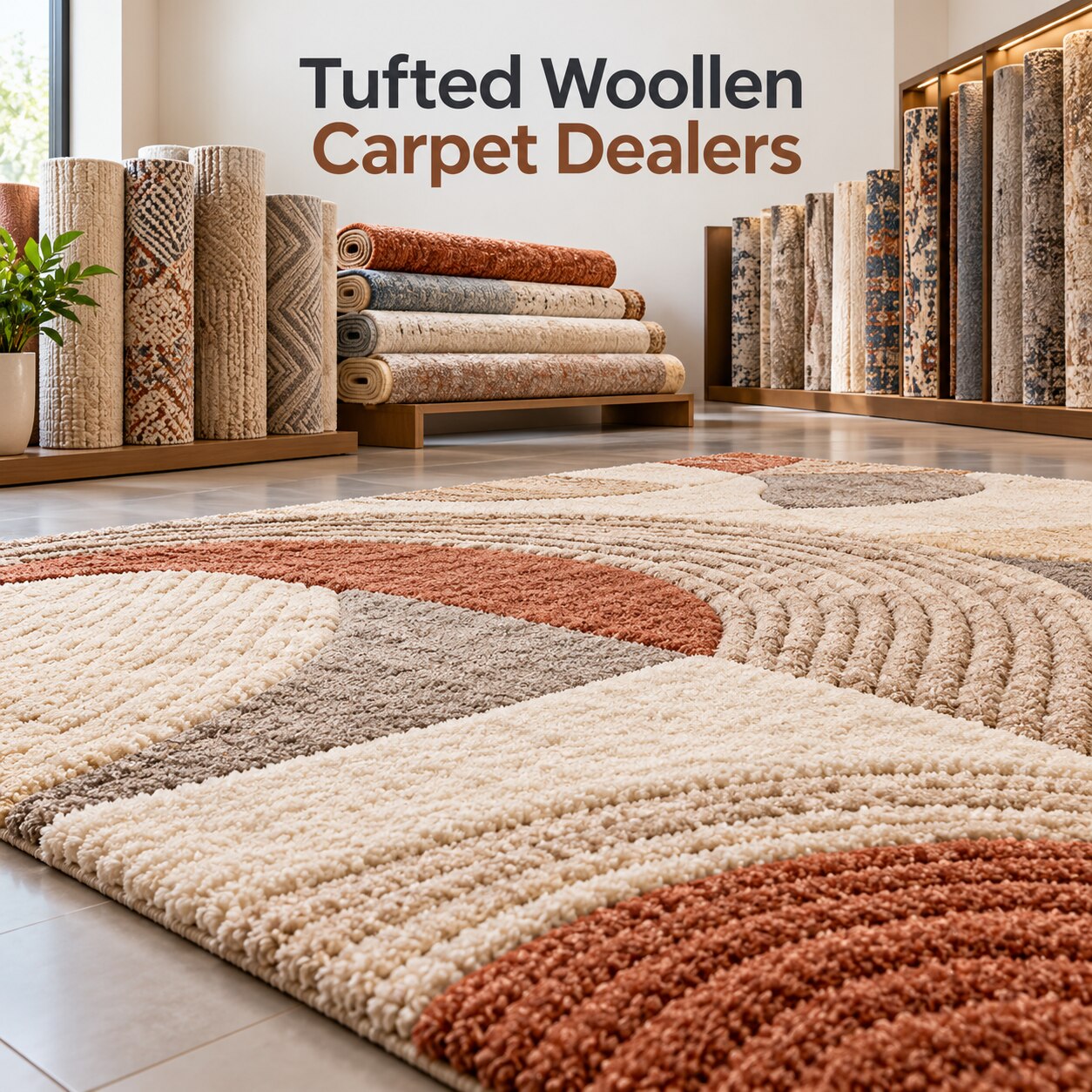
A tufted woollen carpet is made by pushing wool yarn through a primary backing to form loops or cut pile. Latex or another adhesive locks the tufts in place, then a secondary backing is bonded to stabilise the carpet.
A quotation for tufted woollen carpet in delhi should state whether it is broadloom on rolls, carpet tile or a finished rug.
| Construction | Pattern detail | Production and consistency | Repair and price |
|---|---|---|---|
| Hand-tufted wool | Detailed, irregular or bespoke motifs | Slower; skilled workmanship creates small variations | Local repairs are practical; usually higher price |
| Machine-tufted wool | Repeated, programmed patterns | Faster; uniform gauge, pile and colour placement | Damaged areas can be patched; usually lower price |
| Hand-knotted wool | Highly detailed designs with individual knots | Slowest; controlled variation is part of the character | Repairs require specialist knotting; highest labour cost |
| Woven wool | Integrated face and backing structure | Slower manufacture; stable, precise construction | Repairs are specialised; premium commercial cost |
| Synthetic tufted | Broad design range, including printed effects | Fast and consistent; fibre performance depends on polymer and backing | Patching is straightforward; often lower initial price |
For offices, hotels and corridors, tufted wool offers a balance of appearance, acoustic comfort and maintainability, but its backing and pile specification determine performance. Hand-knotted carpets suit feature areas rather than heavy circulation; woven wool withstands demanding use but costs more; synthetic tufted carpet suits tighter budgets and moisture-prone zones.
Wool is not automatically fire-safe: require test evidence for the complete pile, backing, adhesive and underlay assembly.
The specification sheet to request before comparing Delhi quotations
Ask woollen carpet dealers in Delhi for one completed specification sheet per SKU, not a brochure. Without these fields, two quotations can describe “wool carpet” while offering different wear, maintenance and installation performance.
1. Fibre: record wool percentage by mass; virgin or recycled status; fibre origin and grade; blend partner; and yarn construction, such as spun or bulked continuous filament.
2. Pile: state whether the surface is cut, loop or cut-and-loop; pile height in millimetres; face weight in grams per square metre; total carpet weight; gauge; stitch density; and pile density. Face weight alone does not establish durability.
3. Construction: identify the primary and secondary backing systems, latex or other tuft-locking compound, total thickness, carpet width, roll length, and whether the product is broadloom or carpet tile. Confirm whether the quoted format matches your floor plan.
4. Performance: request colour-fastness results with the test method and rating, cleaning instructions, and the manufacturer’s tested wear or use classification. Ask for the fire-performance classification and the exact test report for the proposed pile, backing, adhesive and underlay assembly—not a generic claim about wool.
Have each supplier state the SKU, production date or dye lot, country of manufacture and test-report number. Compare like with like before comparing Delhi quotations; otherwise a lower roll price can conceal a different construction or an incomplete installation system.
Choosing pile, density and layout for each trade environment
Choose pile and density by traffic pattern, not face weight alone: a dense, low-pile carpet with strong tuft bind and stable backing can outlast a heavier, taller pile in a corridor. Request stitch density, pile height, yarn twist, backing stability and the manufacturer’s tested wear or use classification.
| Environment | Recommended starting point | Layout and appearance risk |
|---|---|---|
| Hotel corridors | Low, dense pile | Align tuft direction along travel; plan repeats and seams to prevent shading bands and visible wear paths. |
| Guest rooms | Medium pile with firm density | A taller pile improves comfort, but footprints and furniture marks become more visible around beds and tables. |
| Offices | Low to medium, dense pile | Keep pile direction consistent across work bays; rolling chairs and desks expose weak tuft bind. |
| Retail floors | Low, dense pile | Use a directional plan for aisles; irregular traffic quickly shows shading and crushed tracks. |
| Restaurants | Low, dense, easy-maintenance pile | Avoid tall pile beneath tables, where chair movement traps debris and leaves permanent marks. |
| Reception zones | Medium pile with high density | A directional or patterned layout controls shading, but seams must stay outside the main sightline. |
| Low-traffic residential developments | Medium or taller pile at moderate density | Comfort can take priority, provided furniture legs do not flatten the pile. |
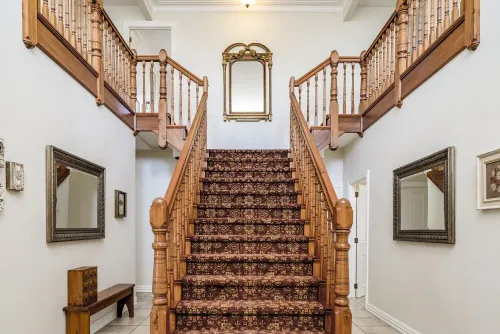
For a broadloom estimate, divide each planned strip length by usable roll width, then add the pattern-repeat increment at every seam, seam-cutting allowance and cutting waste. Add stair treads, risers, nosing returns and landings separately; split irregular plans into rectangles and triangles.
A running-metre quote is comparable only after multiplying by roll width and adding these allowances.
Before you buy tufted wool carpet in delhi, approve a roll-direction drawing showing repeats, seams, stairs and waste. Carpet tiles reduce replacement waste but introduce module joints and different backing constraints.
How to evaluate samples, installation risk and the real delivered cost
Approve a sample only after inspecting it at the actual site, because showroom lighting hides faults that become obvious after installation.
- Press the pile, release it, and check recovery; permanent marks indicate poor resilience or unsuitable use.
- Bend the sample and inspect backing adhesion; lifting latex or secondary backing signals delamination risk.
- Tug several tufts firmly; loose yarn indicates pull-out risk.
- Examine edge finish for straightness, fraying and exposed backing.
- Compare samples under direct and angled light for colour consistency, shading and visible streaks.
- Record the dye-lot number and confirm that replacement rolls will match it.
- Reject persistent chemical, damp or oily odour.
- Rub a dark cloth lightly over the surface to check excessive shedding.
- Place two pieces together and inspect the seam under both lighting angles; gaps, ridges or mismatched pile direction will show.
A quotation must state whether the carpet is installed over underlay or directly on the prepared floor. Underlay changes acoustics, comfort, seam stability and threshold height; omission can create door-clearance and dimensional problems. Require concrete moisture and alkalinity checks before adhesive work, with ASTM F710 used as a concrete-floor preparation reference where specified.
Moisture left in the slab can cause bubbling, staining, odour or adhesive failure.
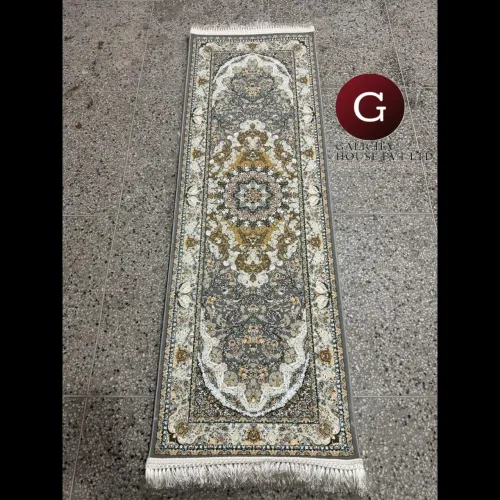
Ask GALICHA HOUSE PVT LTD 8384046294 for a quote that separately identifies site measurement, adhesive, seam cutting, edge treatment, cove or skirting details, delivery, stairs, wastage, installation and taxes. For hotels, offices or public areas, demand fire documentation for the exact carpet, backing, adhesive and underlay assembly—not a generic claim that wool is fire resistant.
Related products
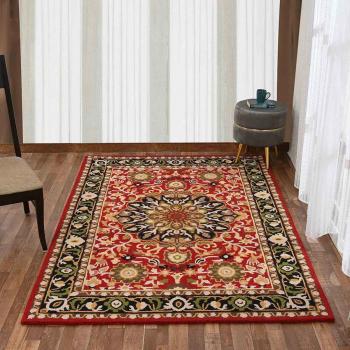 | Tufted Woollen Carpet Tufted Woollen Carpet Tufted Woollen Carpets by Galicha House Pvt. Ltd. Bring warmth, elegance, and timeless beauty into your interiors with Tufted Woollen Carpets from... |
 | Wall to Wall Hand Tufted Carpets Wall to Wall Hand Tufted Carpets by Galicha House Pvt. Ltd. Redefine luxury and comfort with Wall to Wall Hand Tufted Carpets by Galicha House Pvt. |
The Delhi trade-buyer checklist for ordering and protecting performance
Confirm the commercial terms before comparing woollen carpet dealers in Delhi. Ask whether the quoted material is stock-held or made-to-order, then record matching quantity, roll width, dye lot, minimum order, lead time, replacement-stock allowance, cancellation terms and whether the sample is from current production.
Local availability does not prove that one dye lot covers your project.
A buyer ready to buy tufted wool carpet in Delhi should request cleaning instructions, warranty terms and documents for the exact SKU. Compare every quotation as the same installed unit:
- Convert square feet and square metres to one unit; convert running metres using the stated roll width and usable coverage.
- Divide each roll price by its usable installed area, including cutting waste, seams, delivery, installation and taxes.
- Confirm whether the offer is broadloom, tile or a finished rug; do not compare their prices without accounting for replacement and joint limitations.
Put these acceptance terms in the purchase order:
| Check | Define before approval | Reject or record |
|---|---|---|
| Shade | Permitted variation and approved current-production sample | Unapproved dye-lot difference |
| Layout | Pile direction and pattern alignment | Reversed direction or visible shading |
| Edges | Straightness and installation tolerance | Wavy, damaged or poorly cut edges |
| Backing | Adhesion, moisture condition and intact backing | Delamination, contamination or wet packaging |
| Delivery | Roll length, labels, sealed packaging and dye lot | Missing labels, crushed rolls or exposed carpet |
| Defects | Visible-defect limit, tuft pulls and shedding allowance | Cuts, bald spots or unacceptable slubs |
| Warranty | Coverage period, cleaning duties and exclusions | Damage from chemicals, moisture or improper installation |
Frequently asked questions
What is a tufted woollen carpet, and how does it compare with alternatives?
A tufted woollen carpet has wool yarn inserted through primary backing, secured with adhesive and finished with a secondary backing. Compare it with woven carpet, hand-tufted carpet and synthetic options by construction, durability, repairability, appearance and cost.
Which specifications should you request from tufted woollen carpet dealers in Delhi?
Request wool fibre composition, yarn type, pile style, pile height, total weight, pile density, backing construction, carpet width, pattern repeat, fire-performance documentation, colour references, roll dimensions and installation requirements.
How should trade buyers choose pile, density and layout?
Use low, dense pile for corridors, offices and heavy wheeled traffic; reserve deeper or softer pile for lower-traffic hospitality and residential areas. Plan pattern repeats, seams, door swings, furniture layouts and cutting waste before ordering.
How do you calculate the real delivered cost of a wool carpet order?
Add carpet, transport, unloading, floor preparation, moisture testing, adhesive, underlay, installation, seam work, cutting waste, trims, cleaning and taxes. Confirm who carries responsibility for shade variation, damaged rolls and installation defects.
Related product
 | Wall Carpet Wall Carpet Wall Carpets by Galicha House Pvt. Ltd. Enhance the elegance and style of your interiors with luxurious Wall Carpets from Galicha House Pvt. |
Keywords